 Now
NowA gallery is built one act of attention at a time.
Before a collection becomes history, it is simply a succession of choices. Someone pauses before a painting. Someone notices the confidence of a line, the strange balance of a composition, the quiet authority of an object made by hand. It is brought closer, turned toward the light, and considered. Then another work arrives, and another. In this way, almost imperceptibly, a gallery develops a memory of its own.
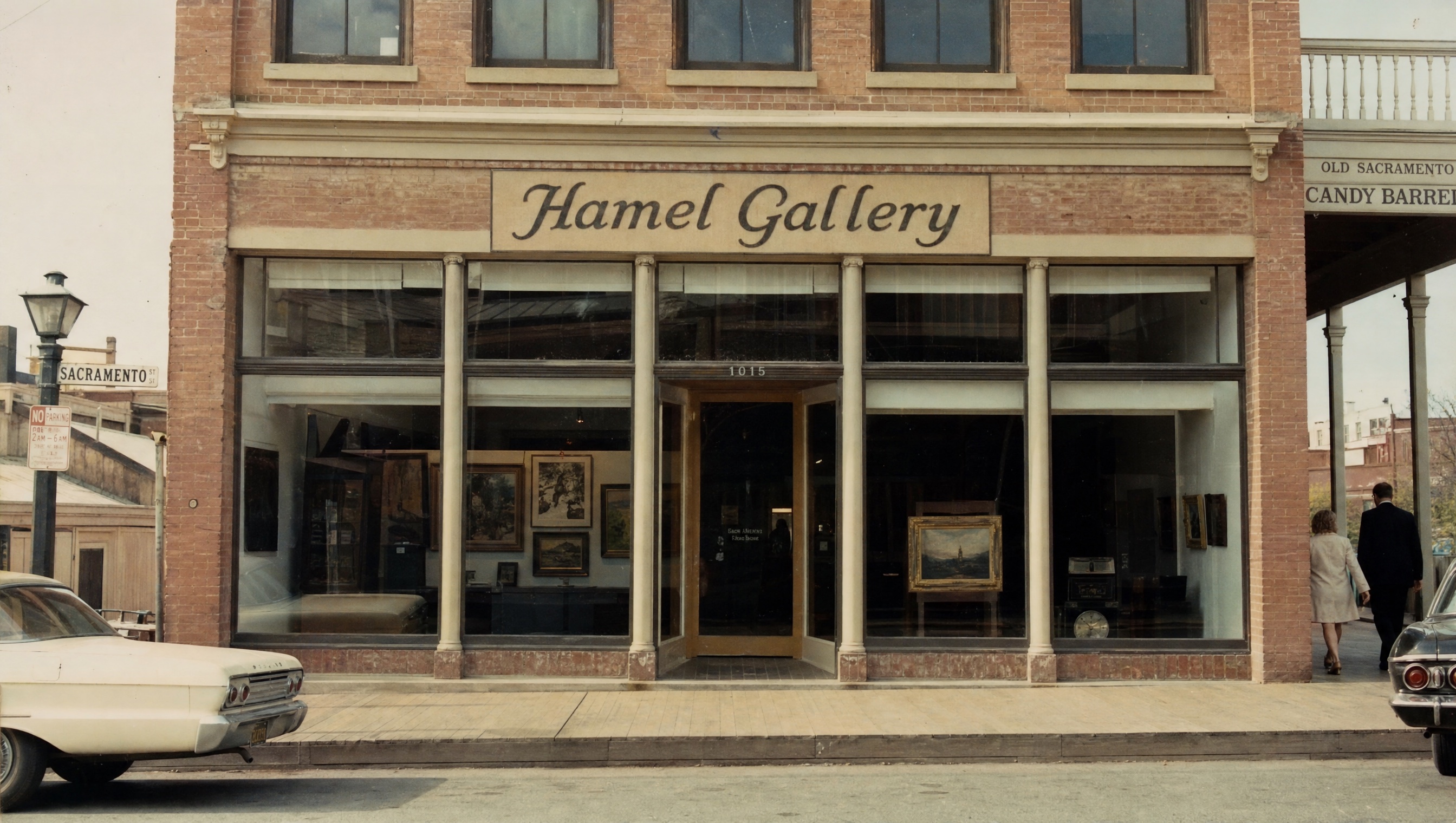
Hamel Gallery gathered works that did not need to resemble one another to belong together. A western landscape could share a room with a Japanese print. A carved figure could stand near a watercolor whose entire drama was held in a few translucent marks. Their connection was not a single school or period. It was the conviction that each deserved to be looked at.
The life of such a place is usually measured in small encounters: the sound of a frame being lifted from a wall, a conversation held a little longer than expected, a signature discovered in the corner of a canvas, a collector returning to see the same work once more. Most of those moments leave no formal record. Yet they remain present in the things that passed through the gallery.
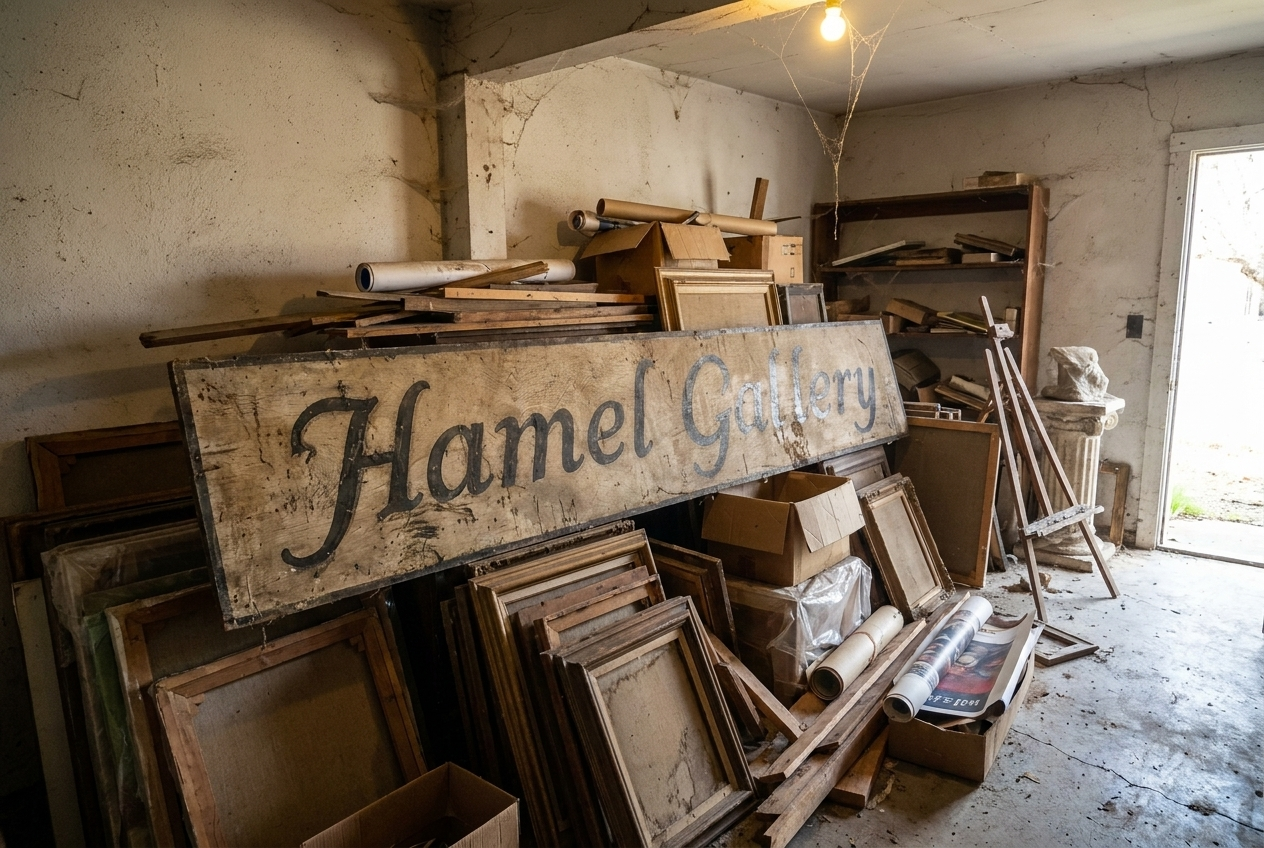
When the public chapter of a gallery ends, the objects do not become less themselves. Paint retains the gesture that placed it there. Paper carries its impression. Wood keeps the marks of the tool. Frames acquire their own evidence of travel and display. The collection becomes quieter, perhaps, but it does not become empty.
What survives is rarely a perfect archive. There are labels without dates, names written in unfamiliar hands, old frames whose histories are inseparable from the pictures they surround. Some works arrive with clear records; others ask for patience. The honest response is neither to embellish what is unknown nor to dismiss it, but to begin with the object and follow every clue it offers.
That is the work now underway. Each piece is encountered again—not as a number in a long inventory, but as a distinct presence. Surfaces are photographed. Measurements are checked. Signatures, inscriptions, labels, and construction are considered together. Certainty is used carefully, and uncertainty is allowed to remain visible where the evidence has not yet resolved it.
A collection is renewed when people can stand before it again. The next chapter does not erase the old one; it carries its traces forward. A work leaves one room and enters another. It meets a new light, a new wall, and a person prepared to look closely. That simple exchange—between object and attention—is how the story continues.
What remained was never merely inventory.
It was a record of looking: paintings chosen, objects considered, editions preserved, and frames carrying the evidence of another era.
Western scenes sit beside Japanese prints. Sculpture meets watercolor. Familiar names appear beside signatures still inviting a closer reading.
Now the works are being seen individually—photographed, measured, and given enough space to command attention on their own terms.
For a time, the collection left public view.
The works waited without a gallery wall around them. Some retained names and records. Others offered only a signature, an old label, or the silent authority of the object itself.
Artist, date, provenance, and condition are presented from the evidence available. Where the record is incomplete, the language remains careful: mystery belongs to art; false certainty does not.
“A work of art does not become quiet simply because no one is standing before it.”— Hamel Gallery